Capacitors
1 uf 50v Capacitor
৳16
- Fresh, latest-batch stock — never old shelf stock
- Tested before it ships
- Arrives dead? We replace it
- Same-day delivery in Dhaka · Cash on Delivery nationwide
- See it before you buy: visit our shop at Ansar Ali Sarak, Boat Ghat, East Nurer Chala, Vatara
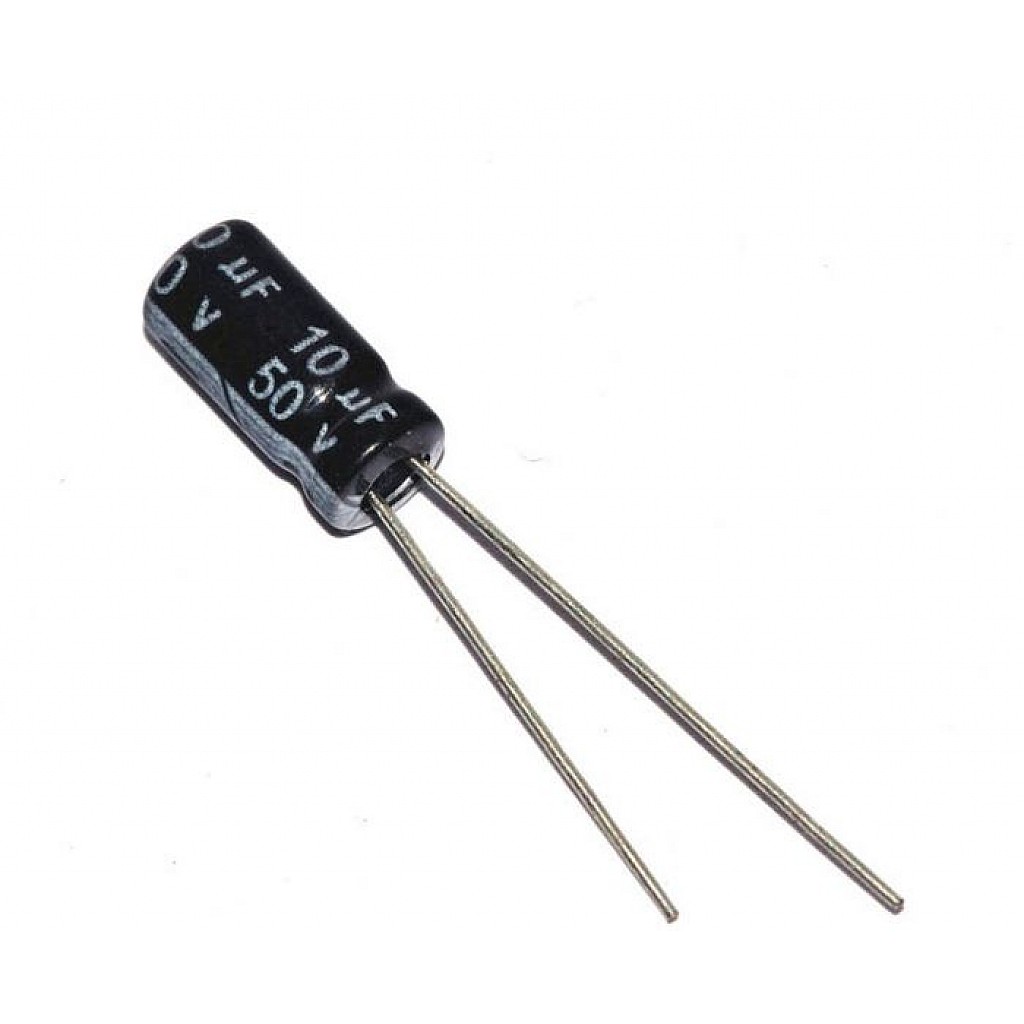
The 1 uf 50v capacitor is a radial aluminum electrolytic rated 50V DC, the smallest electrolytic value most benches carry. Its usual jobs are audio input coupling into a preamp, bypassing op-amp reference and offset pins, sample-hold networks and signal stages that run above hobby voltage. The 50V rating lets the same part live on 24V and 36V rails, which is why amplifier and adapter repair kits keep a few of these slim cans around.
- 1uF at approx ±20% tolerance, 50V DC working voltage
- Polarized: longer lead positive, printed stripe marks negative
- Approx 5 x 11 mm body with 2 mm lead spacing, fits dense boards
- Rated -40°C to +105°C, 1000 hour load life at rated temperature
Mind the polarity when you place it, keep the working voltage under 50V, and it will do its job for years. Order this value through WhatsApp, cash on delivery nationwide.
Not sure it will work? Test your circuit free in Tekko Sim — on your phone, in Bangla or English.
Capacitance: 1uF (1 microfarad)
Rated Voltage: 50V DC
Tolerance: approx ±20%
Type: Aluminum Electrolytic
Mounting: Radial Through-Hole
Polarity: Polarized — longer lead is positive, stripe marks negative
Lead Spacing: approx 2mm
Body Size: approx 5mm diameter x 11mm height (typical)
Temperature Range: -40°C to +105°C
Load Life: 1000 hours at rated temperature
Leakage Current: very low after formation
Typical Uses: audio input coupling, op-amp reference bypass, sample-hold networks, high-voltage signal stages
| Category | Capacitors |
| Model no. | CAP-1UF-50V |
| Availability | In stock |
| In stock | 20 pcs |
| Delivery | Cash on Delivery, nationwide Bangladesh |
Customer reviews
No reviews yet — be the first.
Questions about the 1 uf 50v Capacitor
What is a 1uF 50V capacitor used for?
Signal-level jobs — coupling audio into preamps and op-amps, bypassing reference and offset pins, and holding charge in sample-hold networks, especially on 24V/36V stages.
How does it differ from a 1uF ceramic capacitor?
Ceramics are non-polarized and compact but lose effective capacitance under DC bias; the electrolytic holds its value and offers predictable behaviour in coupling positions at low cost.
Can I use it in a 5V Arduino circuit?
Yes — it works fine, though a 16V version is usually cheaper there; the 50V part shines in higher-voltage audio and repair work.
Which lead is positive?
The longer unmarked lead; the can's stripe band marks negative. Connect the stripe to ground or the lower-potential side of the signal path.
What happens if I reverse it?
Reverse bias degrades the oxide dielectric — leakage rises and the part can fail — so always confirm polarity first.
Why choose electrolytic over film for audio coupling?
Film is cleaner but physically large; a 1uF electrolytic gives flat audio response in a tiny can, which is why production amplifiers use exactly this compromise.
How should I test or replace one?
Read it with a capacitance meter (accept roughly ±20%) or replace outright during repair — visible bulge or leakage means it must go.
1 uf 50v ক্যাপাসিটরের দাম কত?
সর্বশেষ দাম Tekko প্রোডাক্ট পেজে দেখুন — ওখানেই আপডেটেড প্রাইস দেওয়া থাকে।
এই ছোট ক্যাপাসিটরটা কোথায় পাবো?
Tekko অনলাইন স্টোরে স্টকে আছে; সারা বাংলাদেশে হোম ডেলিভারি সুবিধা আছে।
প্রিঅ্যাম্প বা অপ-অ্যাম্প কাজে এটা কী কাজে লাগে?
ইনপুট কাপলিংয়ে 1uF প্রায় ফ্ল্যাট অডিও রেসপন্স দেয় আর রেফারেন্স পিন শান্ত রাখে — তাই প্রিঅ্যাম্প, ইকুয়ালাইজার আর রেডিও বোর্ডে এই ভ্যালু বারবার লাগে।
সিগন্যাল পাথে কিভাবে লাগাবো?
আগের স্টেজের আউটপুটে লম্বা লিড (পজিটিভ), পরের স্টেজের বায়াস নোডে দাগের লিড বসান — কাপলিং ক্যাপ হিসেবে DC আটকে সিগন্যাল পাস করবে।
নতুনরা কি ইলেকট্রোলাইটিক দিয়ে শুরু করতে পারবে?
অবশ্যই — ছোট বডি, স্পষ্ট পলারিটি আর কম দামের কারণে 1uF ইলেকট্রোলাইটিক দিয়ে কাপলিং আর বাইপাস শেখা সবচেয়ে সহজ।
More in Capacitors
All capacitors →