1N4007 vs 1N4148: Which Diode Goes Where
1N4007 and 1N4148 look the same but are not interchangeable. Current, voltage and speed compared, and which diode protects a relay.
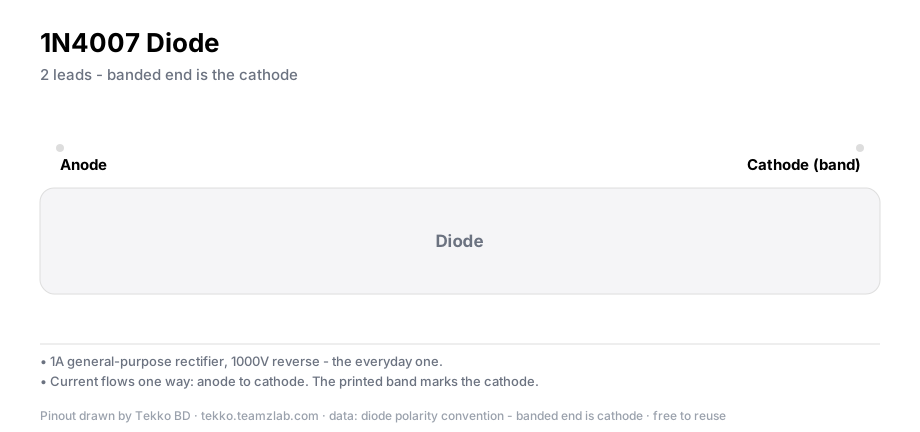
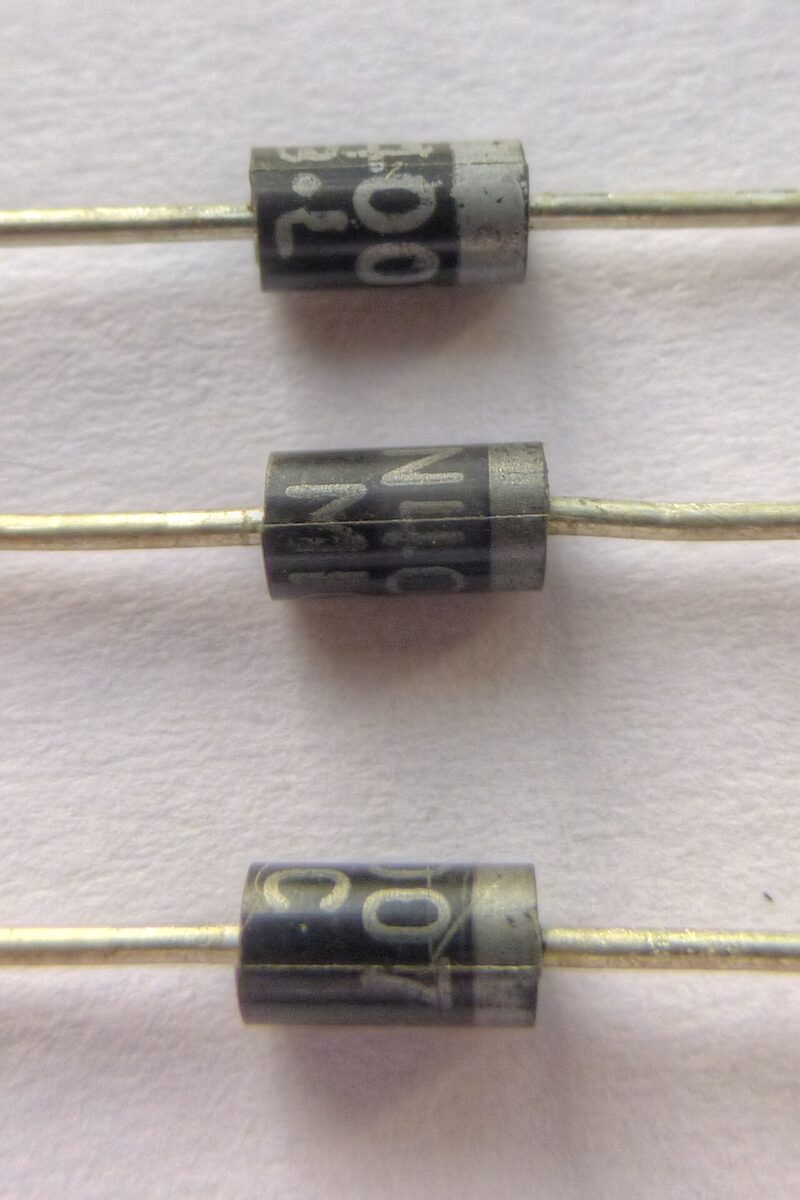
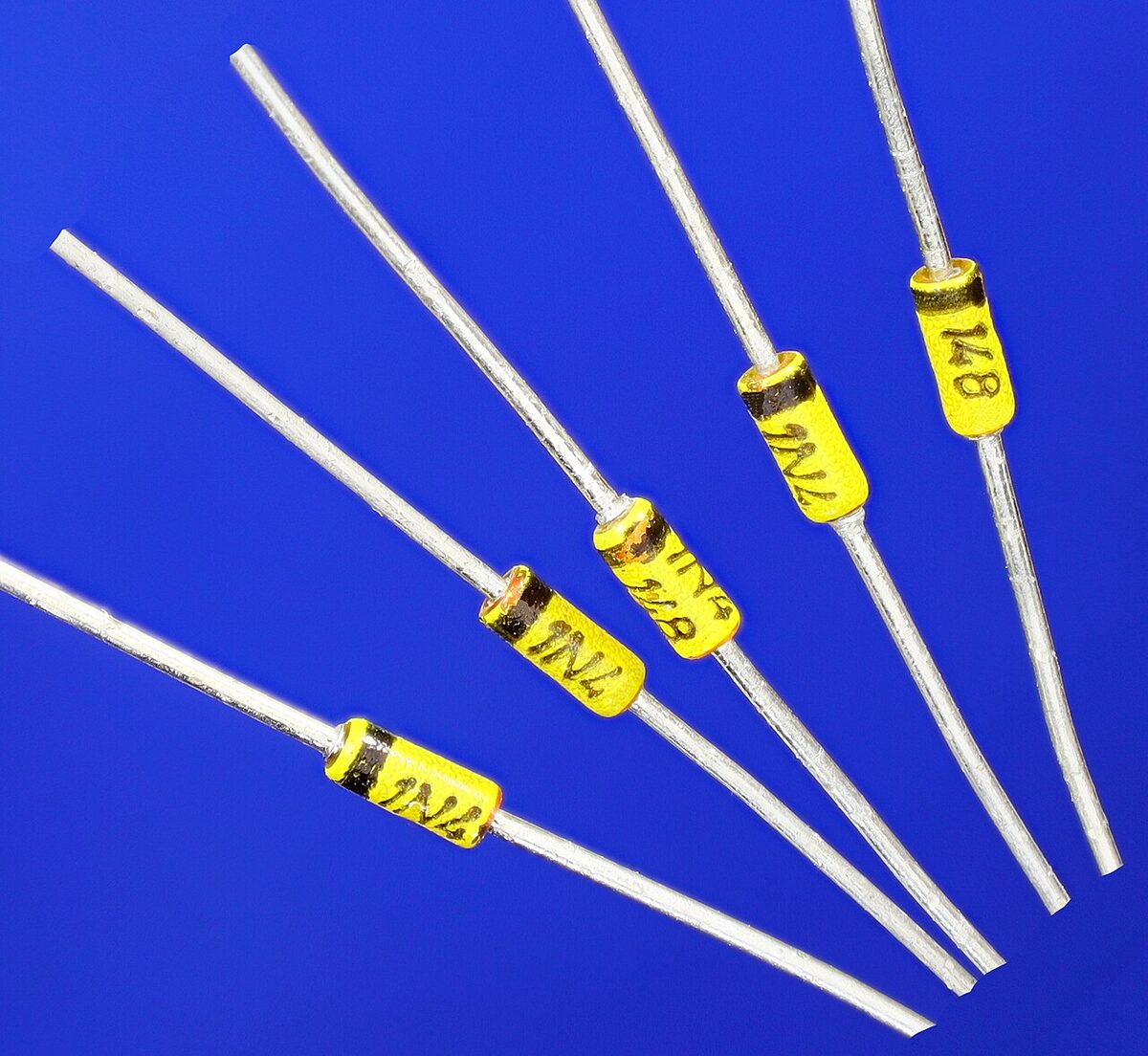
The 1N4007 and the 1N4148 are both small black cylinders with a white stripe, and they are easy to mix up in a parts bin. They do different jobs. The 1N4007 carries power. The 1N4148 switches in nanoseconds. Put the wrong one in the wrong slot and the circuit either burns or misbehaves.
A diode is a one-way valve. Current flows toward the stripe (the cathode) and is blocked the other way. The difference between these two sits in three datasheet numbers: current, reverse voltage and switching speed.
Side by side
| Spec | 1N4007 | 1N4148 |
|---|---|---|
| Type | rectifier (power) | signal / switching |
| Max current | 1 A | ≈200–300 mA |
| Reverse voltage | 1000 V | 100 V |
| Speed | slow (recovery in microseconds) | fast (nanoseconds) |
| Forward drop | ≈0.7–1 V (rises with current) | ≈0.6–0.7 V |
| Typical job | adapter rectification, reverse-battery protection | relay flyback, logic clamps, snubbing |
1N4007 or 1N4148: which one goes where
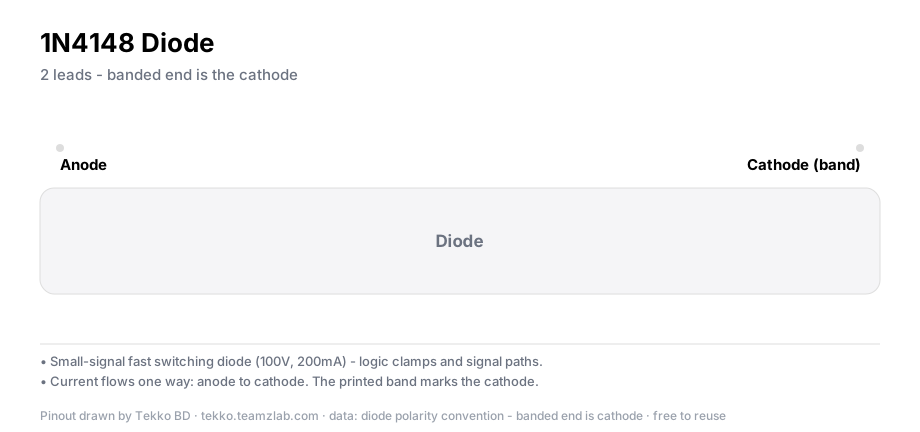
Use the 1N4007 when you are rectifying a supply, protecting against a reversed battery, or anywhere power-level current flows. 1 A and 1000 V make it the usual choice in small adapter circuits.
Use the 1N4148 when speed matters: clamping logic lines, snubbing, and the flyback across a small relay coil. It reacts in nanoseconds and catches pulses a slow diode lets through.
The relay flyback diode
Warning
When a relay coil switches off, it kicks back a high-voltage spike (flyback) that can kill the pin driving it. Ready-made relay modules usually include this diode, but check any module before you trust it. If you drive a bare coil directly, wire a flyback diode across the coil with the stripe (cathode) on the + side.
A small 5V relay coil (≈70–80 mA) is fine with a 1N4148, and the speed is a bonus. For a big coil or a motor, use a power diode like the 1N4007.
Step 1: try it on a breadboard
You need one diode, an LED and a 330 Ω resistor.
// Circuit: 5V -> diode -> 330 ohm -> LED -> GND
// Stripe toward the LED: the LED lights (forward)
// Flip the diode: the LED goes dark (reverse is blocked)
Flip the diode and the LED goes out, because the current is blocked. That one test shows what a diode does. Both parts behave the same here. The real difference is in the current and speed lines of the datasheet, which a breadboard will not show you.
Verify it works
- Forward: LED on. Reverse: LED off. Same on both diodes.
- Multimeter in diode mode: about 0.6 V forward drop on a 1N4148 and about 0.5–0.7 V on a 1N4007. Reverse reads OL (open).
Common problems
- It works fine with no flyback diode, until it doesn't. Every switch-off sends a spike into the pin, and the board dies slowly. Add or verify the flyback diode today.
- The 1N4148 keeps burning out. It is a signal diode and tops out around 200–300 mA. Motors and big loads need the 1N4007.
- Wired backwards. The circuit will not work, or it shorts. Stripe = cathode, and current flows toward the stripe.
FAQ
I only have one of the two. What now? A 1N4007 works as a relay flyback diode. It is slower, but it still catches the spike. The reverse is not safe: do not put a 1N4148 in a 1 A power path.
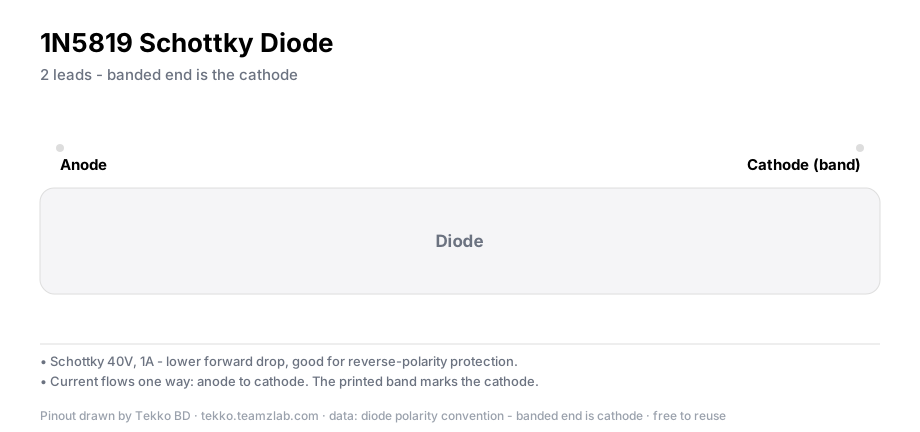
What about Schottky diodes? A Schottky such as the 1N5819 drops only about 0.3 V, so it wastes less power. It costs a bit more and suits places where efficiency matters.
What do two diodes in series do? Their drops add (≈1.4–1.7 V). It is an old trick for shedding a small amount of voltage.
More from Tekko
- Diodes category
- Relay modules, ready-made boards with flyback included
- Resistor color code guide
Sources
- Vishay and ON Semiconductor 1N4007 / 1N4148 datasheets
Prices can change; check Tekko for the latest.