Ceramic Capacitor Codes: What 104 Means, pF to µF
How to read a ceramic capacitor code: what 104 or 103 means, pF-nF-µF conversions and electrolytic polarity, with Tekko's capacitor value table.
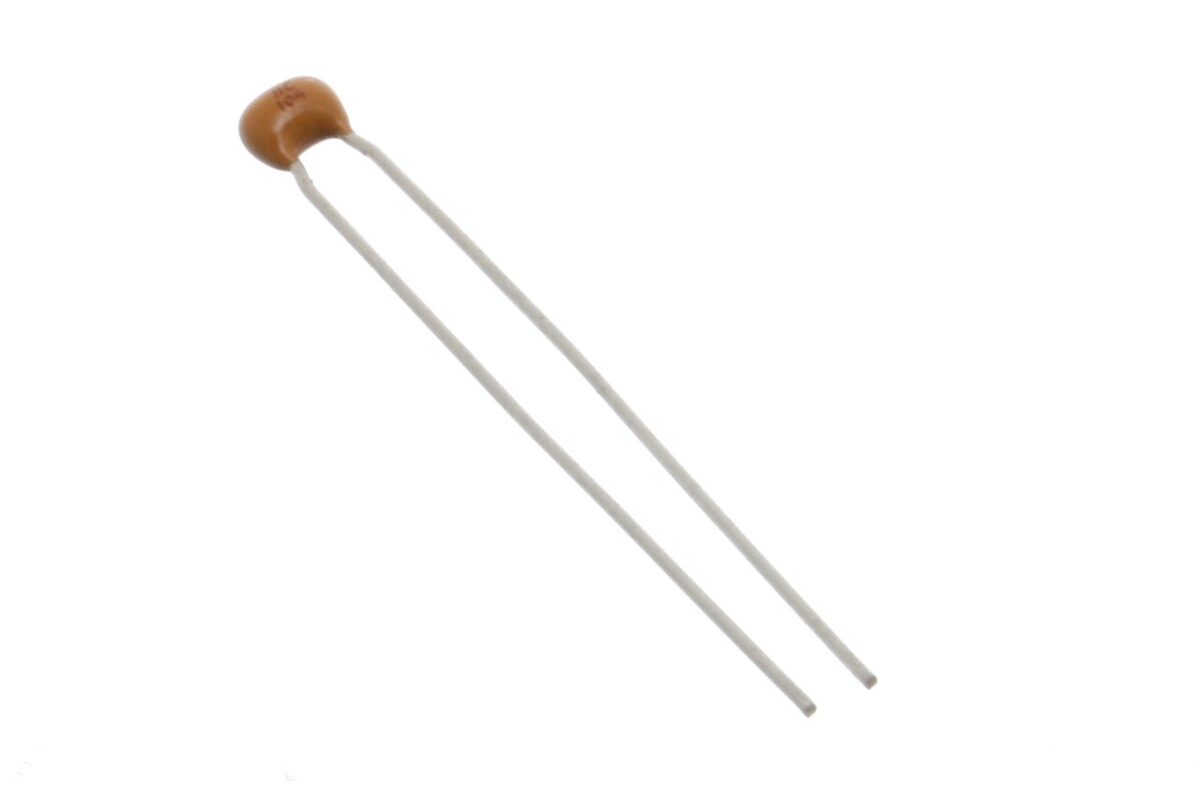
The 104 printed on a ceramic capacitor looks like 104 µF. It is 0.1 µF. A small disc has no room for units, so the capacitor code gives the value in picofarads, and the third digit says how many zeros to add. Shop listings mix units too: "0.01 nf" on our shelf means 10 pF. Misread a value and the circuit stops working, and finding why takes longer than reading the code would have.
Three conversions to memorize
- 1000 pF = 1 nF
- 1000 nF = 1 µF
- So 104 = 100000 pF = 100 nF = 0.1 µF. One capacitor, three names.
How to read a ceramic capacitor code
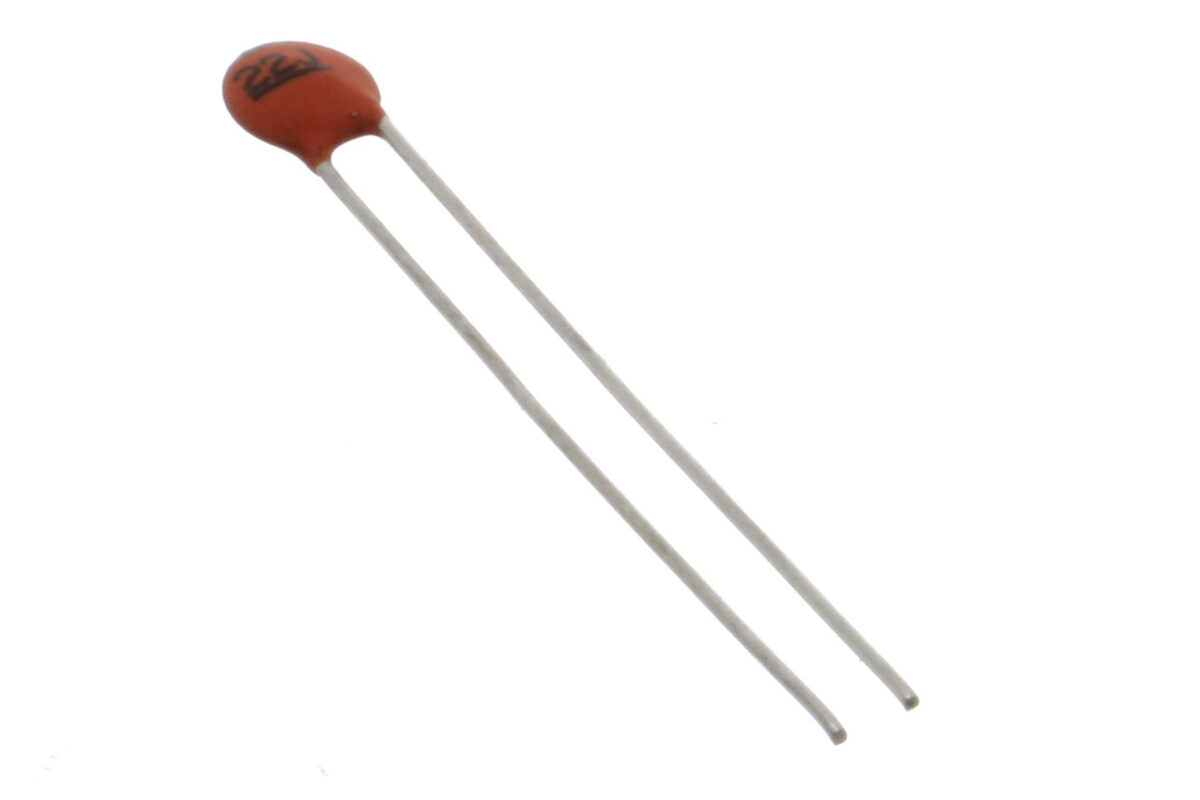
Three digits: the first two digits, then that many zeros, in pF.
| Code | Math | Value |
|---|---|---|
| 22 | direct | 22 pF |
| 47 | direct | 47 pF |
| 100 | 10 + no zeros | 10 pF |
| 221 | 22 + 1 zero | 220 pF |
| 102 | 10 + 2 zeros | 1 nF |
| 103 | 10 + 3 zeros | 10 nF |
| 104 | 10 + 4 zeros | 100 nF = 0.1 µF |
| 224 | 22 + 4 zeros | 220 nF |
| 105 | 10 + 5 zeros | 1 µF |
A letter can stand in for the decimal point: 4R7 = 4.7 pF.
Tip
104 (0.1 µF) is the one you will see most. It is the decoupling capacitor: put one next to the power pin of every IC and a lot of random noise and resets go away.
Electrolytics (the big cans)
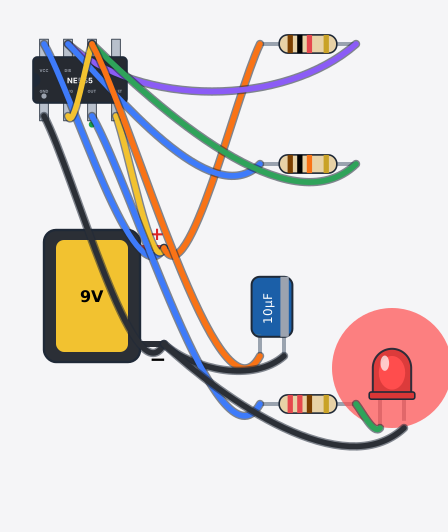
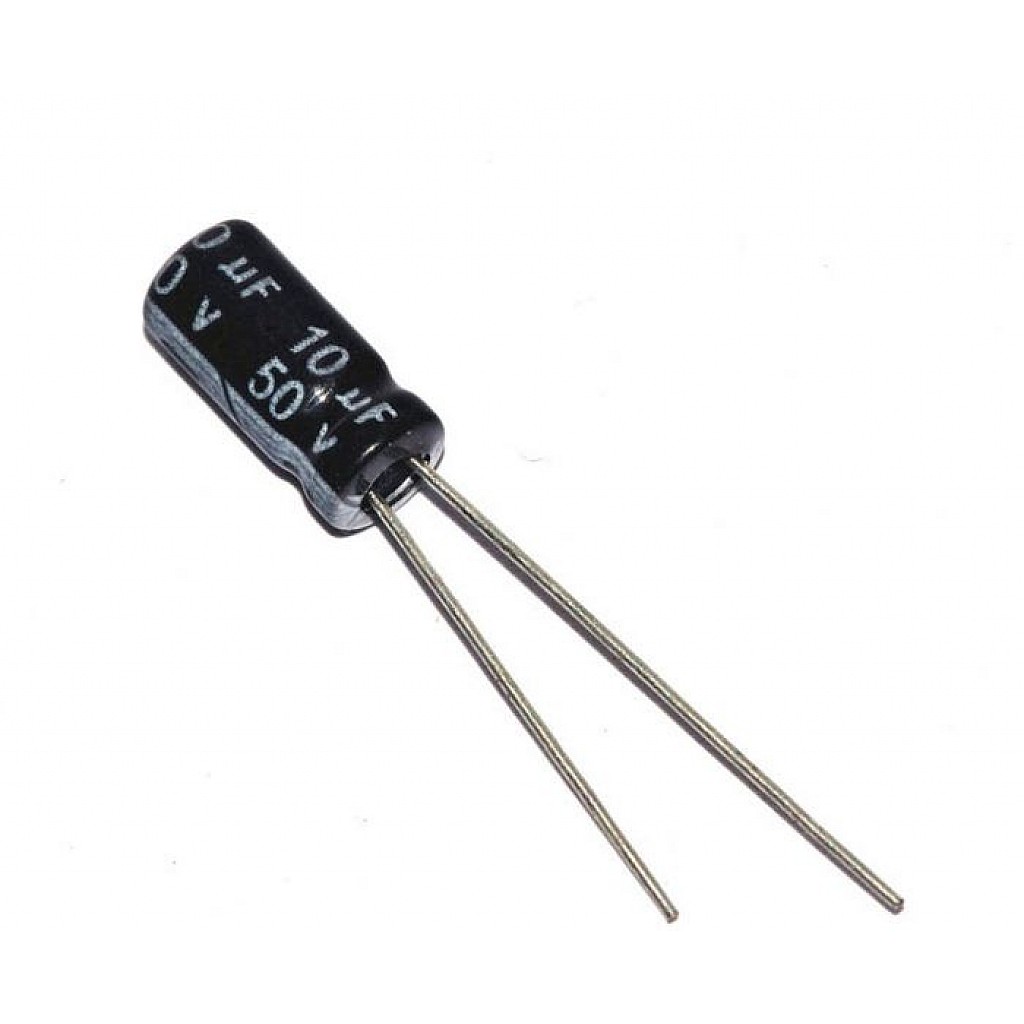
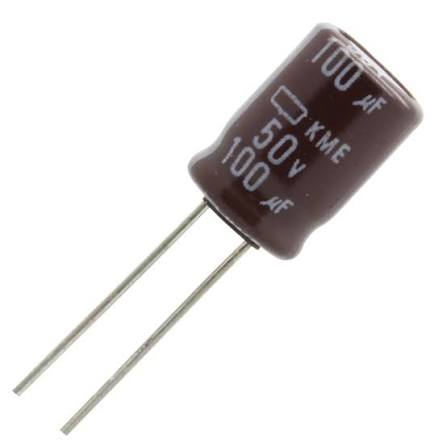
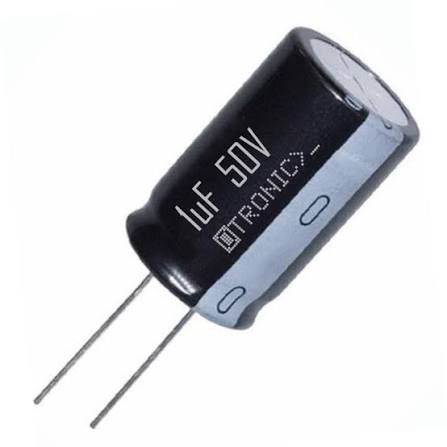
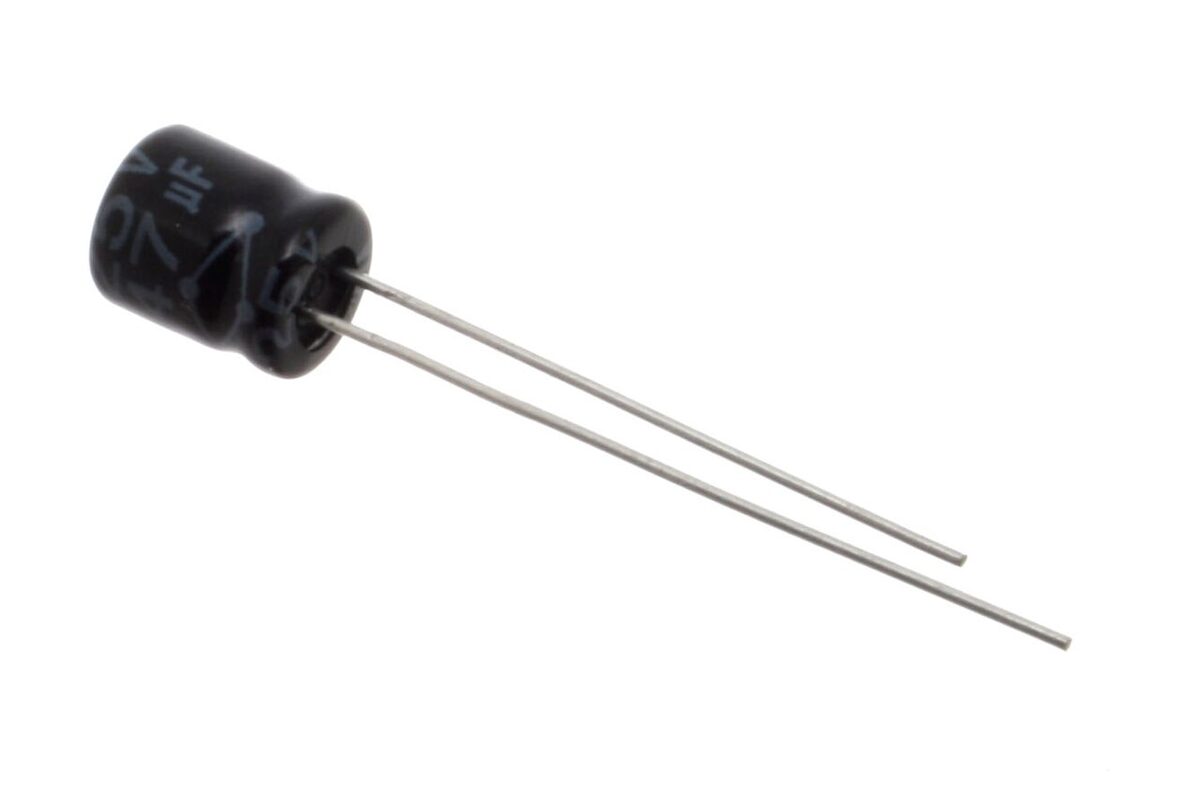
Larger values (1 µF up to thousands) are printed in full: 220µF 16V. These are polarized. The long lead is +, the short lead is −, and the light stripe on the can marks the − side.
Warning
An electrolytic connected backwards heats up and can vent violently, small explosion included. Keep the voltage rating 25–50% above the circuit voltage: on a 5V rail, use 16V or higher.
Tekko's values in one table
| Shop name | Actual value | Code | Where it's used |
|---|---|---|---|
| 0.01 nf ceramic | 10 pF | 100 | crystal circuits, RF |
| 0.1 nf ceramic | 100 pF | 101 | filters, tuning |
| 22 pF ceramic | 22 pF | 22 | crystal load caps |
| 47 pF ceramic | 47 pF | 47 | crystal load caps |
| 1 µF 50V | 1 µF | — | audio coupling |
| 10 µF 50V | 10 µF | — | buzzers, smoothing |
| 22 µF 16V | 22 µF | — | small supply filters |
| 47 µF 16V | 47 µF | — | sensor module filters |
| 100 µF 50V | 100 µF | — | after regulators |
| 220 µF 16V | 220 µF | — | 5V rail reserve |
| 470 µF 16V | 470 µF | — | motor/servo loads |
| 1000 µF 16V | 1000 µF | — | after adapters |
Prices for all of them are in the capacitors category.
Verify it works
Decode a ceramic capacitor, write your answer down, then check it against the table. If your multimeter has a capacitance mode, measure it. A ±10% spread is normal on ceramics.
Common problems
- Reading 104 as 104 µF. The classic mistake. A three-digit code always starts in pF.
- Mixing up 0.01 nf and 0.1 nf. One is 10 pF, the other 100 pF, a 10× gap from one decimal place. Write the code down when you order.
- Wrong crystal load caps. A 16 MHz crystal usually wants a pair of 22 pF. A 104 in that spot can stop the oscillator starting.
- Electrolytic backwards. Check the leads and the stripe. If in doubt, the stripe side is −.
FAQ
Can a ceramic capacitor go in either way round? Yes. Ceramics have no polarity. Only electrolytics and tantalums do.
Is a bigger µF value safe? On filters, usually. In a timing circuit the capacitor value sets the time, so keep the exact value there.
Is a capacitor a battery? No. It stores charge, but it gives it back in an instant, not over hours. It soaks up sudden shocks rather than powering a run.
More from Tekko
Sources
- Standard electronics practice. Ask on WhatsApp for a part's datasheet.
Prices can change; check Tekko for the latest.