Resistors
Resistor 220k Ω
৳2
- Fresh, latest-batch stock — never old shelf stock
- Tested before it ships
- Arrives dead? We replace it
- Same-day delivery in Dhaka · Cash on Delivery nationwide
- See it before you buy: visit our shop at Ansar Ali Sarak, Boat Ghat, East Nurer Chala, Vatara
The Resistor 220k Ω is a 220 kilohm, 0.25W film resistor for circuits that think in microamps: op-amp feedback arms, bias dividers for low-current transistor stages, and 555 or Schmitt-trigger timing legs that stretch into seconds. It also sits in the top of an LDR divider that wakes a microcontroller at dusk, and in electret microphone preamp feedback.
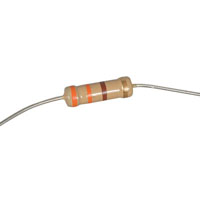
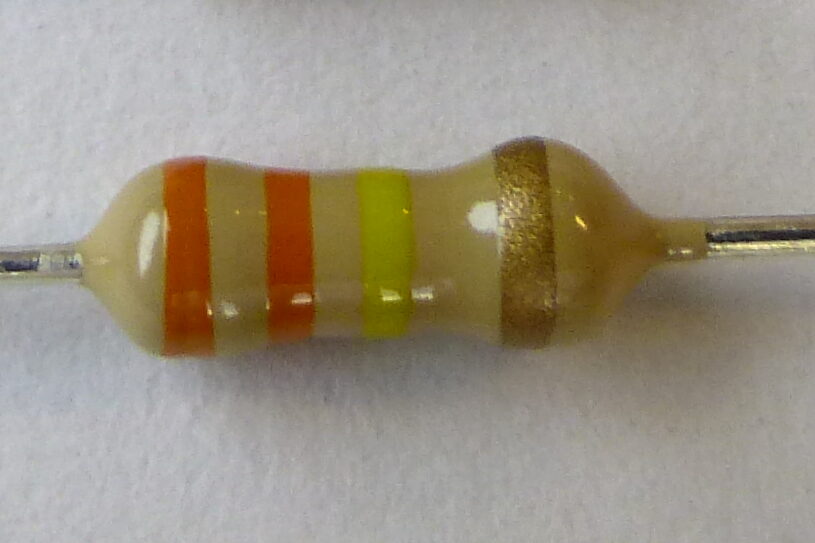
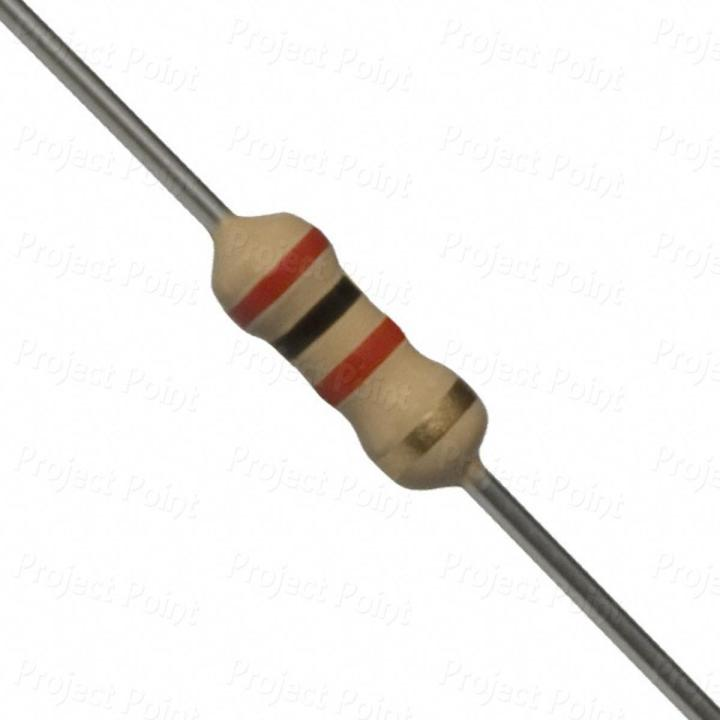
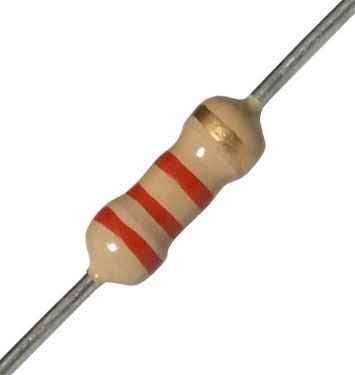
- Bands red-red-yellow-gold: 220 kΩ at ±5%
- 250V max working voltage, power-limited well below that in hobby use
- Film element keeps divider ratios repeatable across a semester of lab use
- Axial through-hole, no polarity
For true gain matching, measure a pair with a multimeter and use the two closest parts.
Not sure it will work? Test your circuit free in Tekko Sim — on your phone, in Bangla or English.
Resistance: 220 kΩ (220,000 Ω)
Tolerance: ±5%
Power Rating: 0.25 W (1/4 W) at 70°C ambient, derate linearly above
Type: Film resistor with insulated epoxy coating
Temperature Coefficient: approx ±250 ppm/°C
Max Working Voltage: 250 V
Colour Bands: Red - Red - Yellow - Gold
Package: Axial Through-Hole
Lead Diameter: approx 0.55 mm, pre-tinned copper-clad steel
Lead Form: Straight axial, breadboard and 2.54 mm grid friendly
Body Size: approx 2.5 mm diameter × 6.5 mm length
Operating Temperature: -55°C to +155°C
Quantity: 1 piece per unit ordered
| Category | Resistors |
| Model no. | RES-220K-025W |
| Availability | In stock |
| In stock | 87 pcs |
| Delivery | Cash on Delivery, nationwide Bangladesh |
Customer reviews
No reviews yet — be the first.
Questions about the Resistor 220k Ω
What is a 220 kΩ resistor used for?
Feedback dividers around op-amps, base bias for low-current transistor stages, RC timers that run for seconds, and sense networks where the measured node must not be loaded down.
How do the colour bands decode?
Red is 2, red again is 2, yellow multiplies by 10,000, so 22 x 10,000 = 220,000 Ω, and gold marks the ±5% tolerance.
How does tolerance affect an amplifier gain?
With ±5% on two gain resistors the gain can drift roughly 10%, so match a pair with a multimeter when precise gain matters.
Why does my breadboard reading differ from the marked value?
Above 100 kΩ, finger contact and dirty rows add parallel paths, so measure the part out of circuit for a true reading.
Can I build 220 kΩ from other values?
Yes. 100 kΩ plus 120 kΩ in series gives exactly 220 kΩ; for a lower value, 470 kΩ in parallel with 330 kΩ lands near 194 kΩ.
Does insertion direction matter on a breadboard?
No. Resistors are symmetric, so either lead can face either node.
More in Resistors
All resistors →